Cannon Balls 3D: Tower Crash
Famobi PlusArcade
4.8395.00 Reviews
- Version
- 20261019
- Installs
- 1.00M
- Age Rating
- Everyone
Screenshots
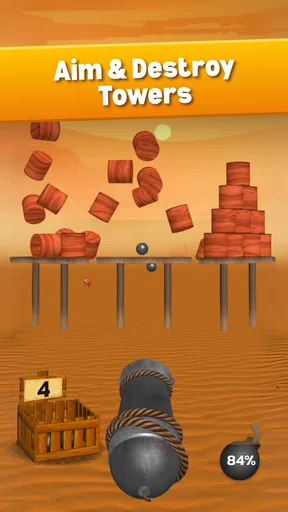
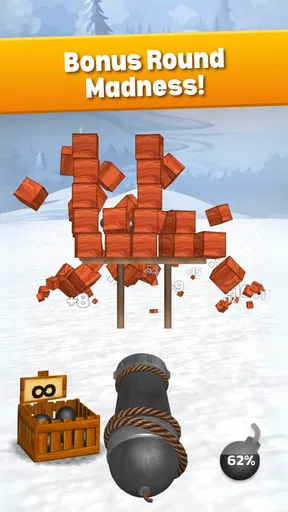
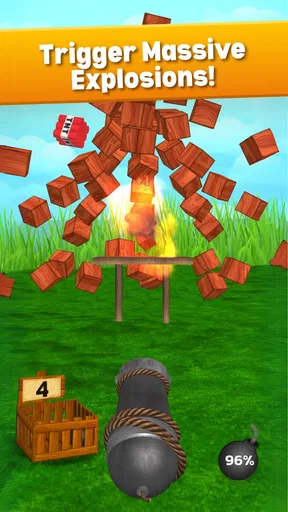
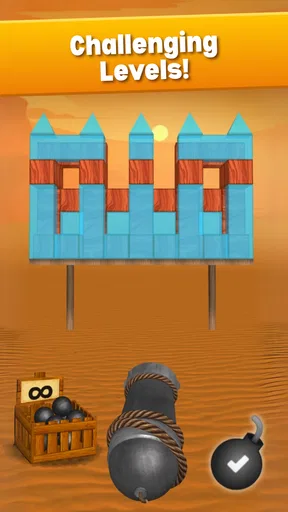
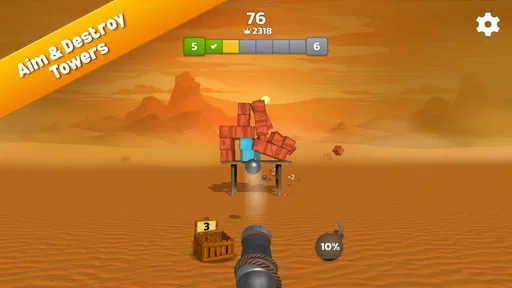
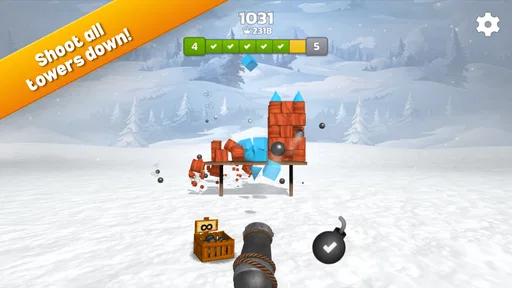
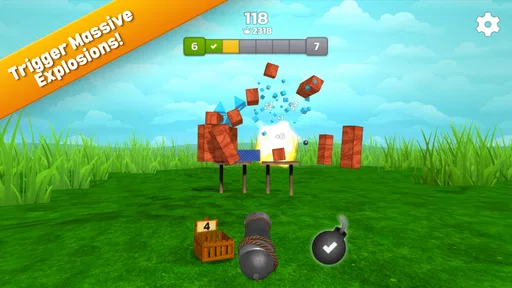
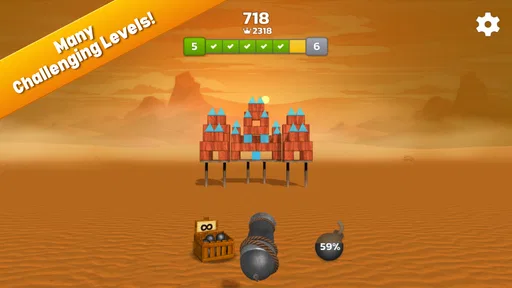
Our Review of Cannon Balls 3D: Tower Crash
 Analysis by Appyee
I spent time with Cannon Balls 3D: Tower Crash as a quick arcade game, paying particular attention to how easy it is to understand, control, and fit into everyday situations. Its central idea is immediately clear: aim a cannon, fire at a three-dimensional tower, and bring the structure down. That simplicity is the main attraction, but it also makes the game’s presentation and control feel especially important. When there are only a few actions to learn, every visual cue, tap, and pause in the action affects whether the experience feels comfortable or frustrating.
This is a free game from Famobi Plus, rated for Everyone, and it belongs firmly to the casual arcade space. I found it most appealing when I wanted a short distraction rather than a deep campaign or a demanding competitive challenge. The game is easy to pick up without studying instructions, which makes it suitable for a wide range of players, including people who do not normally spend much time with mobile games. At the same time, players who need extensive control customization or who prefer detailed accessibility settings should approach it with more caution.
How clearly the game communicates what to do
The strongest part of the experience is its readable premise. A cannon and a tower create a visual relationship that needs little explanation, so I could begin playing without first learning a complicated interface. That matters for younger players, occasional players, and anyone who finds dense menus tiring. The short store description, “Cannon Balls 3D,” is accurate in spirit: the game is built around a direct cannon-and-target interaction rather than a large collection of systems.
Navigation feels most approachable when the game keeps attention on the play area. Instead of asking me to move through a complicated web of menus, the core activity is presented as a straightforward sequence of aiming and firing. This reduces the amount of memory needed between attempts. I did not have to remember a long chain of commands, and a player returning after several days can understand the objective again almost instantly.
That clarity also creates a useful advantage for shared devices. If I handed the phone to someone who had never seen the game, I could explain the basic goal in a few seconds. It works well in a family setting where different people may have different levels of gaming experience. A child can understand the physical target, while an older relative can participate without having to learn a traditional arcade control scheme.
There is a difference, however, between understanding the goal and reading every important detail comfortably. Three-dimensional structures can become visually busy as pieces overlap, and the player may need to judge depth rather than simply select a flat target. For someone with reduced visual acuity, the challenge is not the concept of firing but distinguishing the useful parts of the tower from background elements and judging the best point to hit.
I would recommend playing on a screen with comfortable brightness and avoiding glare. That is not a special setting in the game; it is a practical adjustment that can make the tower easier to inspect. I also found that taking a moment before firing is more useful than tapping rapidly. Looking at the shape of the structure first helps reduce guesswork and makes the game feel less visually rushed.
Why the simple loop helps occasional players
The short-form design is a good match for small breaks. I can imagine using it while waiting for an appointment, taking a brief pause from work, or relaxing before bed. There is no need to commit to a long story or remember a complicated objective. The game’s “relax, shoot, fire and destroy” spirit works best when treated as a compact mental reset rather than a serious test of mastery.
That same simplicity may disappoint players who want a strong sense of progression, character development, or strategic variety. Compared with a larger arcade title that offers several modes, elaborate missions, or extensive customization, this game puts nearly all of its value in the immediate satisfaction of lining up a shot and watching the tower collapse. If that physical payoff does not hold your attention, there may not be enough surrounding material to compensate.
The game has reached over a million installs and holds a 4.6 average from around ten thousand ratings, which suggests that its accessible concept has found a broad audience. I would not treat those figures as a guarantee that every player will find it comfortable, though. Popularity can confirm that the basic idea works for many people, but individual needs around vision, touch control, pace, and sensory load still matter more when deciding whether it suits you.
Motor control, visual comfort, and sensory load
For motor accessibility, the appeal is the limited control vocabulary. A player does not need to manipulate a virtual character through several simultaneous actions. The essential interaction is focused on aiming and firing, which is easier to understand than a game that combines movement, jumping, attacks, and camera control. This can make the title more approachable for someone who finds multi-button layouts difficult.
Still, a simple control scheme is not automatically easy for every hand. Precision aiming can be demanding for players with tremors, limited range of motion, or difficulty maintaining a steady touch. A small movement may send the aim away from the intended point, and repeated attempts can become tiring if the game expects careful adjustment. I noticed that the most comfortable approach was to hold the phone securely, use a light touch, and avoid trying to correct the aim with several quick movements.
That technique is especially useful on a smaller phone, where the playable area gives less room for the finger and the hand may cover part of the scene. A larger display can make the tower easier to inspect, but it may also be heavier to hold for long periods. For players with hand fatigue, a short session is likely to be more comfortable than extended play. The game’s casual structure supports that approach because it does not demand a long uninterrupted run.
One of the less obvious trade-offs is that the three-dimensional presentation can make the game more engaging while also increasing the visual work required. A flat puzzle with clearly separated tiles may be easier for some players to parse. Here, the player benefits from rotating attention around the visible structure and noticing how one impact affects the tower. That spatial judgment is part of the fun, but it can be tiring for people who struggle with depth perception or busy moving objects.
I would also be careful about using the game in a visually demanding environment. On public transport, in a bright outdoor space, or while walking between places, it may be harder to follow the tower and aim accurately. The game is technically well suited to short sessions, but the best short sessions are still ones where the player can sit or stand safely and give the screen a moment of attention.
Sound, pace, and control of stimulation
Arcade presentation often depends on impact: the cannon fires, the structure reacts, and the destruction provides feedback. That can feel satisfying and can help a player understand whether an action worked. For someone sensitive to sudden sound or repeated visual effects, however, the same feedback may become tiring. I recommend checking the game in a quiet, comfortable setting before deciding whether its sensory style suits you.
Players who are sensitive to motion may also want to observe how the three-dimensional tower behaves during play. The depth and collapse effects are central to the experience, so this is not the best choice for someone specifically seeking a completely static visual presentation. I would not choose it as a distraction during a migraine or a period of visual fatigue; a calmer, text-based puzzle would be a safer alternative for that situation.
The age rating of Everyone makes the game broadly suitable in content terms, but an age rating does not describe every accessibility need. A young player may understand the objective while still needing help with aiming. An older player may enjoy the destruction effect but prefer someone else to hold the device. In my view, the best measure is not whether the game looks simple in the store, but whether the player can comfortably see the target and perform the required touch action.
Using it in different everyday situations
A realistic use case is a five-minute break between tasks. I can open the game, play a few attempts, and put the phone away without having to reconstruct a story or save a complicated position. That makes it more practical than a long-form action game when I have limited attention. It also works as a casual handoff game at home: one person can try a shot, then another can take over, because the objective is visible and does not depend heavily on personal character upgrades.
For a parent, this can be a simple way to offer an age-appropriate arcade activity, but I would still supervise younger children around in-app purchases. The game itself is free, while in-app items are listed from $0.99 to $49.99 per item. That range is important for families because a child may understand the firing mechanic without understanding the financial meaning of a purchase prompt. Device-level purchase protections are sensible whenever children use the phone.
For someone with concentration difficulties, the direct objective may be helpful. There are fewer layers to remember than in a strategy game, and each attempt has a concrete visual goal. On the other hand, if repeated destruction effects or quick feedback become distracting, the game may not provide the calm focus that its simple premise suggests. In that case, a slower puzzle with deliberate turns would probably be a better fit.
For players who use a phone one-handed, comfort depends heavily on the device and on how much aiming adjustment is needed. I found that one-handed play is possible in principle because the interaction is focused, but it is not automatically ideal for every hand size. A secure grip matters more than speed. If the phone tends to slip or the player has to stretch to reach the active area, two-handed use is the safer and more comfortable choice.
Offline or connectivity expectations are another practical consideration for anyone choosing a mobile game, but I would not make this title my first choice when dependable play in every travel situation is the deciding factor. Instead, I would test it in the exact setting where I plan to use it. A game that feels perfect at home may be less convenient in a crowded waiting room if the screen is hard to see or the player cannot hold the phone steadily.
Where the experience still creates barriers
The largest limitation is the narrow interaction model. It is welcoming because it is simple, yet that simplicity leaves little room for players who need alternative input methods. If touch precision is difficult, the game’s main challenge becomes physical control rather than deciding where to fire. I did not find the experience comparable to a title designed around multiple input options, remappable controls, or extensive assistive settings.
Visual complexity is the second barrier. The tower is not just a single flat button; the player has to interpret shape, position, and likely impact. That gives the game its arcade character, but it can disadvantage players who need high contrast, larger targets, reduced motion, or very explicit visual guidance. I would choose a more visually restrained game for anyone who regularly has trouble separating overlapping objects on a phone screen.
There is also a possible attention barrier for people who dislike repeated trial and error. The pleasure comes from adjusting the next shot after seeing what happened to the structure. Players who enjoy experimentation may find that satisfying, while those who want a clearly signposted solution may feel that progress depends too much on visual guesswork. This is a genuine design trade-off, not a flaw for everyone.
Monetization deserves a practical mention as well. The free entry point makes it easy to try, but the presence of paid items means the experience is not identical to a completely purchase-free arcade game. I would not let a child explore the game unsupervised on a payment-enabled device, and I would not recommend it to someone who wants absolutely no commercial interruptions or spending decisions in a casual game.
The current version is 20260853 and the minimum operating system is Android 9. That makes the compatibility requirement relevant for anyone using an older Android phone. Before installing, I would check the device version rather than assuming that every handset can run it. For players on supported devices, the game is positioned as a lightweight arcade diversion; for people using older hardware, compatibility should be the first practical check.
My inclusive verdict after playing
I see Cannon Balls 3D: Tower Crash as a good recommendation for players who want a direct, visually understandable arcade activity with a satisfying physical objective. It is particularly suitable for short breaks, family handoffs, and people who prefer one central action instead of a crowded control layout. The Everyone rating and free entry make it easy to consider, while Famobi Plus has kept the concept focused rather than burying it under unnecessary systems.
I would recommend it to a friend who enjoys aiming, watching structures react, and improving through small adjustments. My main advice would be to play in a comfortable seated setting, use a secure grip, and give each tower a moment of inspection before firing. That small pause makes the game more manageable for players who find rapid touch input stressful and also improves the quality of the decisions.
I would skip it for someone looking for extensive accessibility customization, a quiet static presentation, a deep arcade campaign, or a game that is unquestionably comfortable for imprecise touch. A slower puzzle, a turn-based title, or an arcade game with remappable controls would be a better alternative in those cases. The game’s strengths come from its immediacy, so its limits are most visible when a player needs more flexibility than that immediacy allows.
Overall, I found the experience easy to understand but not universally effortless. Its most inclusive quality is the clear goal; its biggest barrier is the need to read a three-dimensional scene and aim with reasonable touch precision. That balance makes it a worthwhile free download for many casual players, provided they treat the visual and motor demands as part of the decision rather than assuming that a simple arcade idea will suit every ability or situation.
With around ten thousand ratings and more than a million installs, it has clearly earned broad interest, and the 4.6 average reflects a generally positive reception. I would describe it as a focused, accessible-to-start arcade game rather than a fully adaptable one. If that distinction matches what you want from a quick cannon game, it is easy to recommend; if you need extensive control or sensory options, it is better to choose a title built around those needs from the beginning.
Privacy and Permissions
See what permissions an app requests and how it handles your data.
- Wi-Fi connection information
- view Wi-Fi connections
- Other
- view network connections, full network access, control vibration, prevent device from sleeping, Google Play license check
Verdict
Strengths of Cannon Balls 3D: Tower Crash
- Simple one-touch controls are easy to learn.
- Short levels fit well into quick gaming sessions.
- Satisfying tower collapses provide immediate visual feedback.
- Offline play makes it convenient for travel or limited data.
- Gradual difficulty increases keep early gameplay accessible.
Limitations of Cannon Balls 3D: Tower Crash
- Gameplay can become repetitive after extended sessions.
- Precision aiming may feel inconsistent on smaller screens.
- Some levels rely heavily on trial and error.
- Advertising may interrupt the otherwise quick gameplay flow.
- Limited strategic depth may not satisfy experienced players.
Similar Picks in This Category
View All
Subway Surfers
SYBO Games4.6

Stickman Party 234 MiniGames
PlayMax Game Studio4.6

Subway Princess Runner
Ivy4.4

Temple Run
Imangi Studios4.2

Zombie Tsunami
Mobigame SAS4.6

Stack Ball - Crash Platforms
CASUAL AZUR GAMES4.5
Frequently Asked Questions
What is Cannon Balls 3D: Tower Crash?
Cannon Balls 3D: Tower Crash is a casual physics-based game focused on demolishing towers and structures with cannon shots. You aim, adjust the firing angle, and launch balls to knock down as many blocks as possible. The gameplay is easy to understand, but later levels require more careful planning because ammunition, obstacles, and tower layouts make each shot more important.
How do you play Cannon Balls 3D: Tower Crash?
The main objective is to destroy the entire structure using the cannon and the limited number of balls available. Before firing, you can usually control the direction and angle of the shot, then observe how the projectile interacts with the tower. Successful gameplay depends on identifying weak points, creating chain reactions, and avoiding wasteful shots that do not contribute to the collapse.
Is Cannon Balls 3D: Tower Crash free to download and play?
Cannon Balls 3D: Tower Crash is generally offered as a free-to-download mobile game, allowing players to access its core levels without an upfront purchase. However, free games of this type may include advertising, optional in-app purchases, or other monetization features. Availability and pricing can vary by platform, region, and version, so check the store listing before installing.
Can Cannon Balls 3D: Tower Crash be played offline?
The basic demolition gameplay may work without a continuous internet connection, which makes the game suitable for short sessions while traveling or when mobile data is unavailable. Nevertheless, some features may require connectivity, including advertisements, purchases, updates, cloud services, or special events. For the most reliable experience, open the game online at least once after installation.
Is Cannon Balls 3D: Tower Crash suitable for children?
Cannon Balls 3D: Tower Crash uses simple controls, colorful visuals, and non-realistic destruction, so it can be approachable for younger players. Even so, parents should review the age rating, advertising, and in-app purchase settings before allowing children to play. The game’s difficulty may also increase over time, making it more appropriate for children who enjoy basic aiming and puzzle challenges.
Play our best games!


